
India's trade account could come under pressure and there could be an inflation push if crude oil prices remain above the $90 per barrel (Brent) for a prolonged period since India imports over 85 per cent of its oil and roughly 50 per cent of its gas. A rebound in economic activity is bound to lead to higher fuel demand. While India is the third-largest importer of crude, it is a net exporter of refined products, which helps to compensate to some degree.

Paytm CEO Vijay Shekhar Sharma said on Wednesday that the company's share market performance has been in line with that of global peers in the sector over the past six months due to macroeconomic factors. "Macro factors like quantitative easing, free money due to US monetary policy and other parameters led to a spook in the market in terms of pricing the IPO. "Paytm's shares have received a similar response to that of global peers in the last six months...But that is not a complete reasoning.

From the Sensex firms, Power Grid, NTPC, Tech Mahindra, Bharti Airtel, Tata Motors, IndusInd Bank, Reliance Industries, Kotak Mahindra Bank and Maruti were among the laggards. Asian Paints, Wipro, JSW Steel, Hindustan Unilever, Bajaj Finserv and Mahindra & Mahindra were among the biggest gainers.

Consolidated earnings of Bharat Forge in Q3FY23 missed estimates, largely due to higher-than-expected interest burden, although operational numbers (including standalone numbers) were close to consensus. Still, the management guidance was positive and appeared to be based on logic.

Nikkei 225 index hit the 40,000 mark for the first time ever on Monday, continuing its bull-run that saw the index reclaim its 1989 peak of 34,000 levels in February. as global investors latched on to Japan's biggest companies on improving shareholder returns, the weaker yen and booming corporate profits. Analysts remain bullish on Japan, mostly aided by gains in technology shares. Adoption of artificial intelligence (AI), according to a note by Morgan Stanley, is likely to benefit Japanese companies, which is almost at par with the US-based companies.
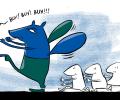
Smaller stocks have emerged as Dalal Street's favourites in 2023 that has turned out to be a "great year" for equities, rewarding investors with big gains, driven by optimism over the country's macroeconomic fundamentals and heavy retail investors participation. Experts said equity markets are experiencing a prolonged bull run and it is during this time that the midcap and smallcap segments tend to outshine their larger counterparts. Till December 22 this year, the BSE smallcap gauge has jumped 13,074.96 points or 45.20 per cent while the midcap index has surged 10,568.18 points or 41.74 per cent.

Among the Sensex pack, Yes Bank, L&T, HDFC, RIL, HDFC Bank, PowerGrid and Coal India were the biggest losers -- falling up to 2.43 per cent.

Analysts agree China, Greece and US Fed developments need careful monitoring but India should gain, over time, from relative rise of the dollar and fall in commodity prices.

The spot gold price has gained 6 per cent this month after closing September in the high $730s. In just two months, gold has amassed 15 per cent in gains, up nearly 25 per cent so far this year. Analysts, however, say the market could be getting overheated and in need of a correction. Jon Nadler of Kitco.com agreed, telling traders to "stay on the alert for another arm-wrestling session between the profit-takers and the buyers out there."

Foreign portfolio investors (FPI) have pulled out $3.5 billion from India's equity markets so far this month. The selling comes on the back of election-induced volatility and the rotation of flows from India to China, where stocks are available at half the valuations. If the selling pressure remains at the current level, this will be the highest FPI pullout since January 2023.

Shares of Mukesh Ambani-owned Reliance Industries Limited (RIL) rose nearly 1 per cent on Tuesday, hitting an intraday high of Rs 2,986.05 per share, after most brokerages reacted positively to the company's March quarter (Q4FY24) results. The bullish outlook stems from Reliance Jio's potential tariff hikes, given the competitive landscape, along with slow but steady improvement in the oil-to-chemical (O2C) vertical.

The Tata Group-owned Air India has readied a five-year transformation plan, which is expected to take its domestic market share to 30 per cent, up from 8.4 per cent logged in June. IndiGo leads with a market share of 58.8 per cent. The transformation plan--Vihaan.AI-unveiled on Thursday revolves around tripling the domestic market share with investments in new aircraft, technology and improvements in customer service.

As order books gain from India's increased capital outlay, some large capital goods and engineering companies are together spending over Rs 11,500 crore in creating new facilities, data shows. Nine engineering and capital goods companies, where data was available, including Siemens, Larsen & Tourbo (L&T) and KEC International, have a combined capital expenditure (capex) of about Rs 11,500 crore or more. Others such as ABB India and Thermax Global are also adding capacities.
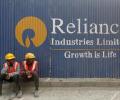
Weighed down by the oil-to-chemicals (O2C) business, Reliance Industries (RIL) results for the April-June quarter (Q1) of 2024-25 (FY25) missed Street estimates. A 14 per cent fall in the O2C segment's operating profit compared to the year-ago quarter and a 22 per cent sequential decline pulled down the consolidated performance. The O2C segment accounts for a third of the overall operating profit and about 60 per cent of the attributable consolidated profit.

These 10 stocks represent the best mix of value and growth, offering relatively low price-to-earnings and price-to-book ratios, a high return on equity, and sufficiently high potential from current levels.

From its lows this month, the stock of Sona BLW Precision Forgings is up 10 per cent on better-than-expected results. The stock rose by 4 per cent in the trading session on Tuesday after Japan's Nikkei Group said the Indian automotive component major has topped its rankings in terms of competitive advantage. The rankings are based on sales, profit margin, capital expenditure, research and development, and market capitalisation.

Many years during which monsoons were poor saw high returns, while normal or excess rainfall has also coincided with poor calendar year gains.

Iron ore mining major NMDC's results for the April-June quarter (Q1) of FY25 were better than estimates. Weak volumes were balanced off by higher realisations, better average selling price (ASP) and lower royalties which boosted bottomline. The revenue was in line with estimates at Rs 5,400 crore, flat year-on-year (Y-o-Y) and down 17 per cent quarter-on-quarter (Q-o-Q).

Selling in index heavyweights, including Infosys, TCS, ICICI Bank and Reliance Industries, dragged the benchmark indices into the negative for the second straight session, analysts said. Among the Sensex shares, Asian Paints fell the most by 3.9 per cent as analysts expressed concerns over rising competition in the domestic paints market following the entry of Aditya Birla group company Grasim Industries into the paints segment. IT shares Infosys, TCS, HCL Tech, Wipro and Tech Mahindra continued to slide amid inflation concerns in the US market.

The Russia-Ukraine conflict, which has spooked financial markets globally, will set the tone for Dalal Street this week amid concerns over energy prices and foreign fund outflows, analysts said. Participants will also track key macroeconomic signals like GDP estimates and PMI data for manufacturing and services sectors to be announced this week, they added. "With earnings season behind us and given the overall sentiments, markets are expected to move in sync with global peers in the coming week. "A close eye will be kept on the developments concerning the Russia - Ukraine crisis and considering the inflation overhang, market participants will also observe movements in energy prices," said Shrikant Chouhan, Head of Equity Research (Retail), Kotak Securities Ltd.

After being sworn in as the 47th president of the United States, Trump started his inaugural address with a sentence that echoed Modi's coinage some years ago, notes Modi biographer Nilanjan Mukhopadhyay.

Auto parts maker Sona BLW Precision Forgings (Sona) reported strong revenue in the fourth quarter of financial year 2023-24 (Q4FY24) as demand for electric vehicles expands. The company reported a 19 per cent year-on-year (Y-o-Y) increase in sales to beat street estimates. Sales were powered by a 34 per cent growth in the battery electric vehicle (BEV) segment and a good show in the differential gear segment.

'You can put 25 per cent right now; put another 25 per cent when Nifty corrects another 500 points.' 'At 13,500 put another 25 per cent and at 13,000 one can get fully deployed.'

Tata Steel was the top laggard in the Sensex pack, cracking over 6 per cent, followed by SBI, IndusInd Bank, HDFC, ICICI Bank and ONGC. Bajaj Auto, Maruti and Asian Paints were the only gainers.

When Life Insurance Corporation (LIC) of India gets listed on the bourses next month, it will be among the biggest listed life insurers globally in terms of market capitalisation (m-cap), assets, and revenue, but will also be among the least profitable and capitalised among its peer group. A big gap between LIC's m-cap, profits, and networth (shareholder capital) will make it one of the priciest insurers globally, in terms of price-to-earnings (P/E) multiple and price-to-book value (P/B) ratio. LIC also lags behind its Indian listed peers in terms of profit and networth.

India's gain will be an additional business of $300 million to $400 million per month if 10-11% of Bangladesh's export is diverted to Indian hubs like Tiruppur.

Amid the funding winter, 128 Indian startups have raised over $995 million (around Rs 8,000 crore) venture capital funding in August, GlobalData said on Thursday. The funds raised in August are 9.7 per cent more than that in the previous month, the data and analytics company said in a statement. Aurojyoti Bose, Lead Analyst at GlobalData, said: "Although the total VC funding amount still remains below $1 billion akin to July, August managed to reverse the decline in fundraising, despite a 2.3 per cent fall in deal volume."

Kotak Mahindra Bank's loan and deposit growth are likely to be affected after the Reserve Bank of India (RBI) asked the private-sector lender not to take on board new customers through the bank's online and mobile banking channels and not to issue any new credit cards, according to analysts. The bank's share price fell 10.85 per cent on Thursday to close the day at Rs 1,643 on the BSE. The RBI's action came after market hours on Wednesday.

The rupee rose by 12 paise to close at 79.78 against the US dollar on Monday due to a weak dollar in overseas markets and an improved appetite for riskier assets. Stronger regional currencies also supported the rupee sentiment ahead of the US Fed policy decision on Wednesday. Weak domestic equities and FII outflows, however, capped sharp gains. At the inter-bank forex market, the local unit opened at 79.86 against the greenback and moved in a range of 79.70 to 79.87 in the day trade.

However, they put in Rs 2,744 crore in the debt markets during the period under review.

Macroeconomic data, the pace of vaccination and global trends would be the major drivers for the domestic equity markets this week, analysts said. Besides, the progress of monsoon will also be monitored. "This week marks the beginning of the new month also, so participants will be eyeing the high-frequency indicators like auto sales and manufacturing PMI during the week. "Besides, the progress of monsoon will also remain on their radar.

Siemens reported solid results in the July-September quarter (fourth quarter, or Q4) of 2022-23 (FY23), with the top line growing 25 per cent year-on-year (Y-o-Y) to Rs 5,808 crore. The operating profit margin stood at 12.1 per cent, led by lower employee costs and other operating expenses. The company follows the October-September financial year.

The outflows could be a result of a mix of factors led by the underperformance of some of the larger funds amid elevated return expectations.

Expect heightened volatility and stress to hit the markets. Caution may be the need of the hour, alerts Akash Prakash.

Domestic equity markets are in elite company. In May, Indian markets joined select developed markets (DMs) such as the US, UK and Germany to record new all-time highs. Among emerging markets (EMs), Brazil is the other market to have logged new highs this month. Asian peers such as South Korea, Taiwan and New Zealand are currently between 2 per cent and 10 per cent below their previous highs made earlier this year. The domestic markets were among the worst-performing major global markets in April amid a lethal second-wave of covid-19 infections.
China's latest decision to introduce export license management to 83 steel products from May 20 may severely hit domestic steel prices and cause a panic in the global market, analysts say.

The Indian economy recovered from the Covid-induced downturn during 2022 and is poised for further improvement in the coming quarters though downside risks emanating from geopolitical tensions, strengthening dollar and elevated inflation will continue. The positive trajectory in the growth trend and improved fundamentals will help the nation in neutralising the impact of global headwinds which are expected to have a bearing on the country's exports in the months to come. The challenges before the government and the Reserve Bank in the new year would be to arrest inflation, check declining value of rupee against US dollar and promote private investment and growth, with a view to ensure that the country remains one the fastest growing major economies of the world.

'If individual stocks start falling 25% to 30% or more, then I doubt how many of them will be able to withstand that (kind of selloff). That is when you'll see panic coming in.'

Experts said concerns over the Union Budget, too, had weighed on the market performance.
 © 2026 Rediff.com - Advertise with us - Disclaimer - Privacy Policy - Sitemap - Feedback - About us - Terms of use - Grievances